Written by: Kelsey Beauchamp
Running a small or medium business means wearing a lot of hats. IT support probably should not be one of them.
For Small and Medium Businesses (SMBs) across North Dakota, South Dakota, and Minnesota, technology has become central to almost every part of the workday. Your employees depend on computers, email, cloud applications, internet connectivity, networks, phones, and other technology just to get their jobs done.
When those systems work, you probably do not think much about them.
When they do not, business can grind to a halt.
That is where managed IT services come in.
Managed IT services give SMBs access to ongoing technology support, cybersecurity, maintenance, and strategic guidance without requiring the business to build an entire internal IT department.
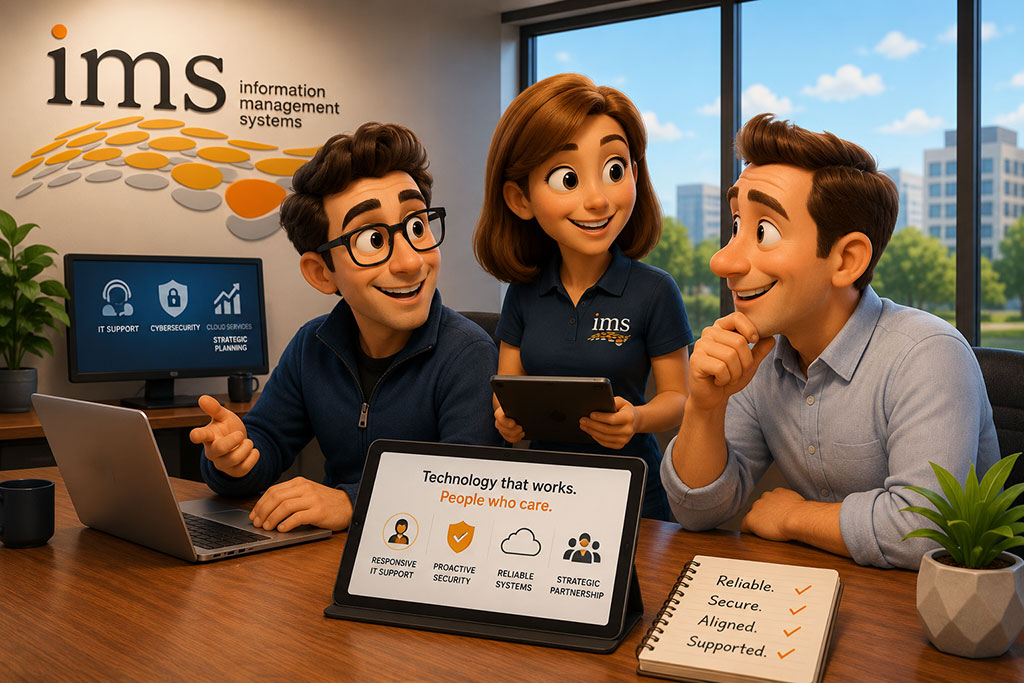
For growing organizations throughout ND, SD, and MN, the right managed IT provider can do more than fix computers. They can help make technology more reliable, reduce business risk, support employees, and ensure technology decisions align with where the company is going.
What Are Managed IT Services?
Managed IT services are an ongoing approach to supporting and managing a company's technology environment.
Instead of waiting until something breaks and then calling someone for help, a Managed Service Provider (MSP) works with the business continuously.
Depending on the organization and its needs, managed IT services can include:
- Help desk and employee IT support
- Remote and onsite technical support
- Computer and device management
- Microsoft 365 administration
- User onboarding and offboarding
- Network and wireless management
- Firewall management
- Cybersecurity monitoring
- Email security
- Data backup and recovery
- Server management
- Software and cloud application support
- Technology vendor coordination
- Strategic technology planning
The goal is not simply to fix technology problems faster.
The bigger goal is to create a technology environment that supports the business reliably, securely, and efficiently.
Why Are Managed IT Services Important for SMBs?
Small and medium businesses face an interesting technology challenge.
They rely on many of the same technologies as much larger organizations, but they often do not have the same internal IT resources.
A 25-person accounting firm, 50-person construction company, or 100-person professional services organization still has employees to support, accounts to secure, data to protect, networks to maintain, software to manage, and technology decisions to make.
Those responsibilities do not disappear because the company is smaller.
Managed IT services allow SMBs to bring in experienced technology resources without trying to hire a specialist for every aspect of IT.
A managed IT partner can also provide consistency. Instead of relying on one employee who happens to know technology or calling different vendors whenever something breaks, the business has a team responsible for understanding and supporting its environment.
5 Ways Managed IT Services Help Growing Businesses
1. Employees Have Somewhere to Turn When Technology Stops Working
An employee cannot connect to the network.
Someone gets locked out of an account.
Email stops syncing.
A new employee starts Monday and needs everything set up.
A critical application suddenly will not work.
Individually, these problems may sound small. Across an entire company, they can consume a surprising amount of productive time.
Responsive IT support gives employees a clear place to go when technology gets in their way.
That means business owners and managers can spend less time troubleshooting technology and more time running the business.
2. IT Becomes Proactive Instead of Reactive
There is a big difference between fixing a problem and managing an environment.
Reactive IT focuses on what broke today.
Managed IT should also ask what could create problems tomorrow.
- Are computers reaching the end of their useful life?
- Is important equipment properly maintained?
- Are backups being monitored?
- Are user accounts configured appropriately?
- Is the network designed to support the company's current needs?
- Does the business have a plan for future technology investments?
A proactive approach helps businesses identify priorities before every technology decision becomes an emergency.
3. Cybersecurity Becomes Part of Everyday IT
Cybersecurity is no longer an issue reserved for large enterprises.
SMBs depend on email, cloud applications, remote access, employee devices, customer information, financial systems, and other digital resources every day.
That makes security a business issue, not simply an IT issue.
Managed IT services can help organizations build practical layers of security around users, devices, email, networks, applications, and business data.
The objective is risk reduction and resilience. No technology provider can eliminate every cybersecurity threat, but businesses can take practical steps to reduce exposure, improve visibility, and prepare for problems when they occur.
This can also become increasingly important when businesses work through cyber insurance requirements, customer security expectations, or industry-specific requirements.
4. Technology Decisions Become Business Decisions
One of the most overlooked benefits of managed IT services is planning.
Technology spending should not be a collection of surprises.
A good managed IT relationship should include conversations about questions such as:
- What technology will need to be replaced next year?
- Where are the biggest operational risks?
- Which projects should be prioritized?
- How will business growth affect technology needs?
- Are employees using technology effectively?
- Where could better systems improve productivity?
- What should the company budget for?
These conversations turn IT from an unpredictable expense into something the business can plan around.
For an SMB, that can be just as valuable as fixing day-to-day technical problems.
What Should You Look for in a Managed IT Provider?
Not every managed service provider operates the same way.
When evaluating managed IT services in North Dakota, South Dakota, or Minnesota, look beyond the list of tools included in a proposal.
Ask how the provider actually works with its clients.
For example:
- How responsive is their support?
Your employees need to know what happens when they ask for help. - Do they understand your business?
Technology recommendations should account for your employees, operations, applications, growth plans, and business priorities. - Do they provide strategic guidance?
Your provider should be able to discuss what is coming next, not just what broke yesterday. - How do they approach cybersecurity?
Security should be integrated into the overall technology strategy instead of treated as an afterthought. - Will they coordinate with your other technology vendors?
When your internet provider, software company, phone provider, or another technology vendor is involved, you should not always have to figure out which company to call first.
A strong IT partner helps find the right path forward.
Why Local IT Support Still Matters in ND, SD, and MN
Technology may live in the cloud, but businesses still operate in real communities.
Companies across North Dakota, South Dakota, and Minnesota have employees, offices, equipment, customers, deadlines, and day-to-day operational realities.
Working with an IT partner that understands regional SMBs can make a meaningful difference.
There is value in working with people who understand how businesses in this region operate and who are interested in building a long-term relationship rather than simply closing another support ticket.
At Information Management Systems (IMS), we work with small and medium businesses that want their technology set up correctly, secured appropriately, and supported when their employees need help.
We believe IT should help you operate with confidence, not create another responsibility for your leadership team.
When Should a Small or Medium Business Consider Managed IT Services?
There is no single company size at which managed IT suddenly becomes necessary.
Instead, look for signals inside the business.
It may be time to consider managed IT services if:
- Technology issues regularly interrupt employees
- The owner or office manager has become the unofficial IT person
- You depend heavily on one internal employee for technology knowledge
- Your current IT support is primarily reactive
- You are unsure whether backups and cybersecurity protections are being managed consistently
- Employee onboarding and offboarding is difficult
- Different technology vendors keep pointing fingers at one another
- Your business is growing and technology is becoming more complicated
- You do not have a clear technology plan or budget
- Leadership wants better visibility into technology risk
You do not need to wait for a major outage or cybersecurity event before improving how IT is managed.
In fact, it is usually much easier to make thoughtful technology decisions when you are not responding to an emergency.
Managed IT Should Make Running Your Business Easier
For most SMBs, the objective is not to become experts in technology.
It is to have technology that works.
Employees should be able to get help when they need it. Business systems should be maintained. Cybersecurity risks should be taken seriously. Leadership should understand upcoming technology priorities. And when something complicated happens, there should be someone ready to help figure it out.
That is what a strong managed IT relationship should provide.
IMS helps businesses across the region keep technology reliable, secure, and aligned with their business goals through responsive IT support, practical cybersecurity, strategic technology guidance, and hands-on coordination.
If your company has reached the point where managing technology is taking too much time, creating uncertainty, or holding employees back, it may be worth having a conversation.
Talk with IMS about your current IT environment, the challenges your employees are experiencing, and where your business is headed. We can help you determine whether managed IT services are the right fit for your organization.
Frequently Asked Questions About Managed IT Services
What are managed IT services for small and medium businesses?
Managed IT services provide ongoing support and management of a company's technology. For Small and Medium Businesses (SMBs), this can include employee IT support, device management, Microsoft 365 administration, cybersecurity, networks, backups, servers, vendor coordination, and strategic technology planning. Instead of relying primarily on reactive support when something breaks, the managed approach focuses on continuously supporting and improving the technology environment.
How much do managed IT services cost for a small business?
The cost of managed IT services depends on factors such as the number of employees, devices, servers, locations, applications, infrastructure, cybersecurity requirements, and level of support required. Many managed service providers use recurring pricing based on users and the technology being managed. A technology discovery conversation is usually the best way to determine what services an organization actually needs before discussing specific pricing.
What is the difference between managed IT services and break-fix IT support?
Break-fix IT is primarily reactive. A business experiences a problem, contacts an IT provider, and pays to have the issue addressed. Managed IT services create an ongoing relationship in which the provider supports users and manages technology continuously. This approach can include proactive maintenance, cybersecurity, planning, monitoring, and long-term technology guidance in addition to resolving everyday IT problems.
Do small businesses need managed IT services?
Not every small business needs the same level of IT support, but managed IT services can become valuable when technology is essential to daily operations and the company does not have sufficient internal resources to manage it. Common signs include recurring IT problems, growing cybersecurity concerns, inconsistent support, difficulty managing employee accounts and devices, rapid growth, and a lack of long-term technology planning.
How do I choose a managed IT provider in North Dakota, South Dakota, or Minnesota?
Look for a managed IT provider that understands SMBs, offers responsive support, takes a practical approach to cybersecurity, provides proactive technology planning, and is willing to coordinate with your other technology vendors. Ask potential providers how they handle everyday support, onboarding, cybersecurity, technology reviews, business continuity, and long-term planning. The right provider should understand both your technology and the business outcomes that technology needs to support.